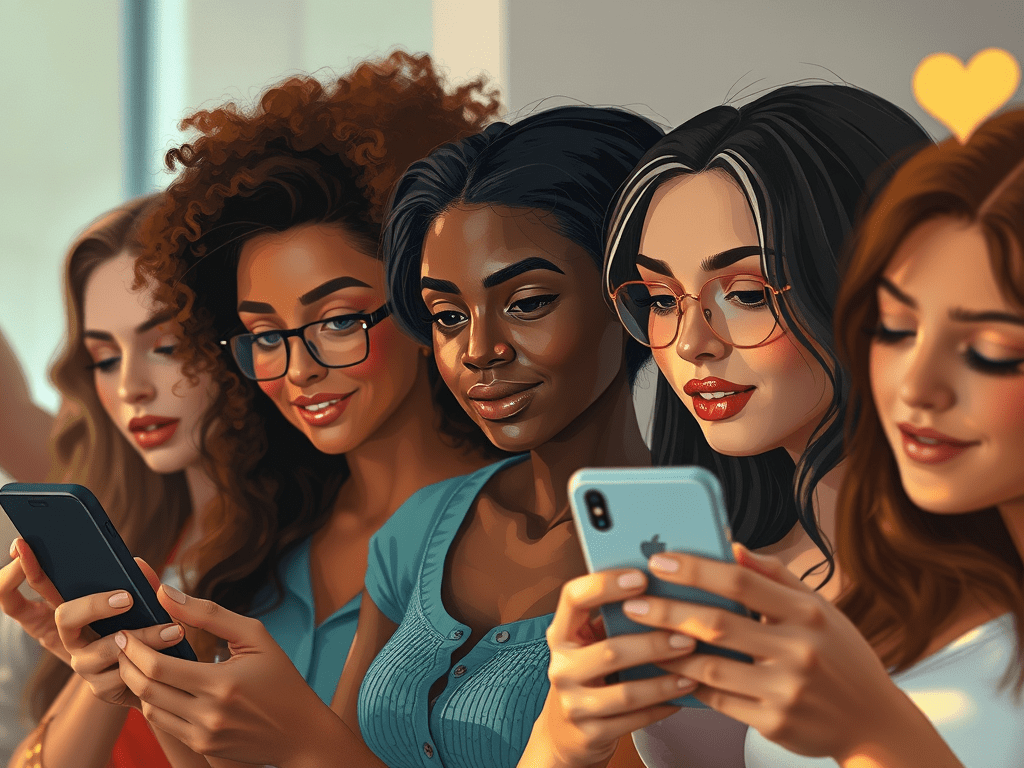
Pretty privilege, also known as the beauty bias, refers to the potential preferential treatment received by those deemed attractive, spanning many areas of life. This bias manifests in many ways, providing economic, social, and political advantages granted based on conventional attractiveness (Khan). This phenomenon can be traced back to the genesis of human existence, with features such as facial symmetry and bodily proportions providing unique evolutionary advantages. While the essence of pretty privilege is evident throughout history, its role in our current society is acutely distinctive. With the rise of social media, physical appearance is being championed more than ever before. This increased focus on physicality sees those deemed conventionally attractive receiving more likes, views and engagement. The audiences of these creators usually consist of young and impressionable individuals, usually female, who are seeking a sense of validation, approval and belonging. The advocation of the physical form in this setting allows young women to attribute social value to attractiveness, which allows for judgement, objectification, and comparison during a period of crucial development (Garcia). While one’s physical attractiveness can reap benefits across the board, the inescapable nature of embodiment must be considered.
The initial stance that I maintained on pretty privilege was viewing it as an advantage, which it is in many ways. However, further research through my participation in my “Reading Bodies” unit at university allowed me to gain a more encompassing perspective on these advantages. Pierre Bourdieu’s concept of “Cultural Capital” refers to the social assets individuals can use to mobilise themselves in society, such as education, speech and physical appearance. Pretty privilege can be aligned with cultural capital, as meeting societal beauty standards can often provide implicit advantages (Dillon). Attractiveness is a quality that can be utilised to gain social advantages. Preferential treatment for job opportunities, more satisfactory customer service interactions and more expedient social interactions are all examples of how one’s attractiveness can be used as cultural capital. Additionally, the role of socialisation cannot be ignored. From a young age, people are socialised to recognise and value certain forms of beauty over others, which in turn allows those in possession of that beauty to learn how to navigate society with that consideration in mind. This fact reinforces the role of pretty privilege in our society, because if that is all we have ever known, then how can changes be made without conscious effort?
On the flip side of the phenomenon of pretty privilege, negative effects can be deciphered. While those deemed attractive may gain certain opportunities, they may also feel objectified by being reduced to their physical appearance while also feeling pressured to maintain this level of attractiveness to maintain their achievements, even if said achievements are gained through individual merit alone. This feeling of societal regulation of beauty can be explained by Michel Foucault’s theory of “Biopower”, outlining how institutions and societal structures regulate the bodies and behaviours of individuals to conform to social norms (Foucault). Specifically, the enforcement of beauty standards and the value placed on those who perform them, shaping how people present and are perceived. The theories of surveillance and self-regulation highlight how individuals internalise the high value placed on attractiveness and how they continue to perform their beauty. For some, this performance of beauty can feel obligatory due to the advantages experienced from its maintenance. This is a form of self-regulation, where individuals monitor themselves and how they are perceived to meet societal standards as a form of self-regulation (Allen). This institutionalised power allows for the continuation of discrimination, normalising inequitable treatment of individuals based on their physical appearance.
While the concept of pretty privilege can deliver legitimate benefits in social and professional settings, it also places a heavy burden on individuals to uphold and maintain beauty standards set by society. While social acceptance is important for all, the objectification of physicality, whether perceived or real, is detrimental to self-image and perceived value within society. This unit has provided a unique insight into the duality of this phenomenon, highlighting aspects that may have previously been left unexplored.



 Libby's Odyssey
Leave a comment